What are the best road bike shoes for cycling? Here’s our top 10 tested and reviewed
For year-round mile-munching triathletes can't go wrong with a robust pair of road bike shoes. Here, Jack Sexty puts 10 pairs to the test

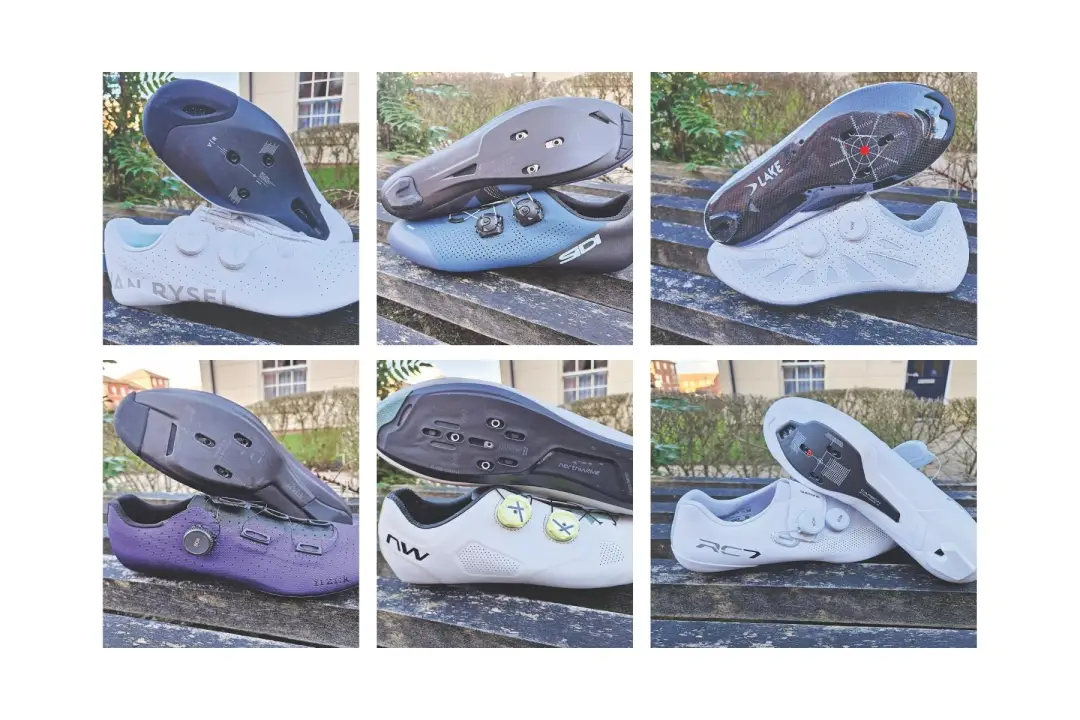
If you’re putting in plenty of outdoor miles year-round and can only budget for one pair of cycling shoes, a pair of the best road bike shoes will probably serve you better than triathlon bike shoes in most scenarios.
With no transitions to think about, the best road shoes will prioritise a secure and comfortable fit, with a more robust build than triathlon-specific bike shoes.
The 14 pairs in this grouptest range from entry- level options, invariably with nylon soles and basic synthetic uppers, through to high-end shoes with full carbon or carbon-injected soles for more stiffness.
The latter will also have more technical uppers designed to hug your foot perfectly while being breathable enough for warm rides. All shoes are unisex, and our test pairs are all size 45.
Why you can trust 220 Triathlon
Our team of experts rigorously tests each product and provides honest, unbiased reviews to help you make informed decisions. For more details, see how we rate and test products.
At a glance: best road bike shoes reviewed and rated
The Lake CX302 (buy) warrant the outlay if you’re after comfortable and racy shoes that’ll last a very long time.
The Boardman Carbon (buy) have a brilliant spec for the price and perform well above their price too.
No longer a budget option, but the Van Rysel Road Cycling Shoe RCR (buy) delivers top-of-the-range performance at slightly lower cost than competitors.
The airy and lightweight DMT KR3 (buy) are the best shoes for the hottest days.
The Sidi Ergo 6 (buy) seem hard-wearing and because many parts are replaceable, you should be able to keep them going for years.
Immediate compatibility with Speedplay cleats will make the Northwave Revolution (buy) appeal to users of Wahoo’s pedals.
Medium-to-high stiffness, competitive weight and good comfort mean the Shimano RC7 (buy) area good fit for training and racing.
When gradients steepen, the Fizik Tempo Decos (buy) has the stiffness and low weight to assist you.
The moderate stiffness, durable construction and comfort of the Fizik R4 Tempo Overcurve (buy) are ideal for training miles.
Although Velcro straps look dated on road shoes these days, they do make the Bont Motion (buy) quick to transition in and out of.
Best road bike shoes in 2026
Best road bike overall

1.Lake CX302
220 Triathlon Verdict
Wonderfully comfortable, light and stiff, the CX302 is an impeccable road cycling shoe. Score: 92%
Pros
- Excellent carbon sole
- Support and comfort
- Minimal weight
Cons
- Expensive but with good reason
| Specifications | |
|---|---|
| Weight | 270g / 9.5oz per shoe (EU44.5) |
| Sole | Carbon |
| Sizing | Narrow, regular, wide / EU 39-50 |
| Features | Dual BOA dials, microfibre vented upper |
The Lake CX302 sits right at the top of the market for road bike shoes in terms of price and performance. I think they’re worth the investment if you want a lightweight, stiff and comfy shoe that’s available in a range of widths as well as sizes.
To boot, the build quality of the CX302 seems high and most parts of the shoe are user-replaceable, which should extend their longevity. Two multi-directional Boa dials enable you to fine tune the tightness of the microfibre upper. This is well ventilated and easy to clean, even in the white colour I tested.
Read my full Lake CX302 review for more.
Highly rated road bike shoes

2.Van Rysel Road Cycling Shoe RCR
220 Triathlon Verdict
Not the low price you once expected from Van Rysel, but nearly as good as far pricier shoes. Score: 90%
Pros
- Very competitive spec for the cash
- Pretty light
- Rigid sole
Cons
- On the narrow side
- Upper a little firm
| Specifications | |
|---|---|
| Weight | 315g / 11oz per shoe (EU 45) |
| Sole | Carbon |
| Sizing | EU 36 to 47 |
| Features | Two Habu dials |
Although the Van Rysel Road Cycling Shoe RCR’s £179.99 price-tag is far from budget, the spec punches above its weight, contributing to impressively high performance.
The carbon sole is rock solid, you get a pair of dials (Habu instead of Boa but they work similarly) and an upper that’s cool in the heat if not the most supple. There’s also plenty of fore/aft adjustment on the sole, but I’d have liked clearer markings to help position cleats correctly. And the narrow toe box probably won’t suit wider-footed riders.
Read my full Van Rysel Road Cycling Shoe RCR review.
Best ventilated road cycling shoes

3.DMT KR3
220 Triathlon verdict
Highly breathable shoe with some impressive tech. Score: 85%
Pros
- Well ventilated
- Very light
- Carbon sole
Cons
- Not cheap
- Unsuitable for winter
| Specifications | |
|---|---|
| Weight | 250g / 11oz per shoe (EU 45) |
| Sole | Carbon |
| Sizing | EU 36.5 to 48 |
| Features | Single BOA dial, knitted upper |
DMT claimed to have produced the first bike shoe with a fully knitted upper back in 2018 and the same tech features throughout here. The KR3 model sits below the KR1 and new range-topping KR0. Yet still features a carbon sole and knit technology to bring the weight down to a feathery 250g per shoe.
Like the KT1 triathlon shoes, one BOA IP1 dial felt adequate for tightening as the upper really hugs your foot in the right places. DMT credits its technical yarns with variable thicknesses for the sock-like sensation you feel in the KR3, and on test rides my feet were happy over many miles.
A super-stiff full carbon sole makes them race ready, and in the rain the knit dries fairly quickly, though I’d hesitate to use them in really bad weather. If I could budget for a luxury summer road shoe, the KR3 would be near the top of my list.
Best value road cycling shoes

4.Boardman Carbon
220 Triathlon verdict
Fantastic shoes that are incredibly good value. Score: 91%
Pros
- Unbeatable value
- Adjustable dials
- Decent venting
Cons
- Sole could be stiffer
- A little warm
| Specifications | |
|---|---|
| Weight | 250g / 11oz per shoe (EU 45) |
| Sole | Weight |
| Sizing | EU 40-47 |
| Features | Two adjustable dials |
With a full carbon sole, two adjustable dials and plenty of ventilation for just £85, the Boardman Carbon seems almost too good to be true. And although it’s not the most luxurious-looking, my reservations were unfounded as this shoe is the real deal.
The sole isn’t as stiff as the higher-grade carbon found on offerings from DMT, but it dealt with everything I threw at it during testing. There’s venting in the soles and plenty of holes on the synthetic upper.
They’re not the most breathable and I’d perhaps ask for a little more venting on the upper, but they’re fine for mild and warm weather. Two ATOP dials allow you to get the ideal amount of tension, while the tongue wraps around the foot nicely.
Best road bike shoes for longevity

5.Sidi Ergo 6
220 Triathlon Verdict
Stunning high-end shoe offering premium comfort and stiffness with some classic features. Score: 89%
Pros
- New, improved fit
- Lighter than before
- Replacement parts available
- Extremely comfortable
Cons
- Closure mechanism is less simple than Boas
| Specifications | |
|---|---|
| Weight | 278g / 9.8oz per shoe (EU 45) |
| Sole | Carbon |
| Sizing | EU 36-50 |
| Features | Two adjustable dials |
Sidi shoes aren’t seen on the feet of as many pros nowadays, but the legendary Italian brand still has a staunchly loyal following, and is attempting to attract the masses back with its latest range.
The Ergo 6 has a redesigned closure system minus a buckle and strap, with two of Sidi’s unique micro-adjusting dials that provide comfortable and fairly straightforward closure over the tongue. Loosening them by pressing two buttons is more complicated than BOA dials, but personally I don’t mind the slight extra faff.
The Ergo 6s are much lighter than their predecessors, weighing around 278g per shoe, and the carbon sole is rated 11/12 on Sidi’s stiffness chart for the most demanding road racers. Sidi’s new Millenium fit means the Ergo 6 is truer to size than older Sidi shoe models, and my 45s fit me perfectly.
They provided plenty of comfort over longer rides thanks to the plush microfibre upper with Sidi’s Firmor lateral support system, and there was no aching from the sole of my foot either. It didn’t feel like the high stiffness sacrificed any comfort, making the Ergo 6 a very well-balanced shoe suitable for all abilities.
After several rides during a tough British winter the shoes still look and feel as good as new, and Sidi even offer replacement parts to prolong their life further. The Ergo 6 is a return to form and then some for Sidi, being every bit the modern road cycling shoe while still retaining some classic Sidi features.
Best road bike shoes for Speedplay users

6.Northwave Revolution
220 Triathlon Verdict
Versatile shoe offering plenty of comfort (and slightly fiddly dials) but great and precise adjustment. Score: 86%
Pros
- Upper is comfy and cleans well
- Carbon outsole is vented and Speedplay-compatible
- Quality features for the money
Cons
- Dials aren’t that easy to use
| Specifications | |
|---|---|
| Weight | 278g / 9.8oz per shoe (EU 45 |
| Sole | Carbon |
| Sizing | EU 36-50, wide fit available |
| Features | Two adjustable dials, Wahoo Speedplay-compatible soles without adaptors |
The Northwave Revolution is an all-round road shoe inspired by pro-level kicks, but without the “extreme stiffness and price point” of some top-of-the- range models to appeal to enthusiasts.
Available in four colourways, the Revolution has an updated carbon sole that is said to follow the anatomical shape of the foot arch for improved comfort. It’s rated 13/15 on Northwave’s stiffness scale.
The soles are vented for extra breathability, and they’re also Wahoo Speedplay cleat-compatible with no adaptors needed. Putting them on, the arch support was immediately noticeable, and the classic fit was ideal for me (Northwave also offers the Revolution in a wide fit).
The dials tighten quickly by winding them counterclockwise, very similarly to BOA dials, but undoing them by repeatedly click a little trigger button is somewhat tiresome; though I can appreciate this offers precise micro-adjustment to find your ideal tension. The silicon gripper inside the heel is a very nifty addition that keeps the foot in place perfectly to avoid any unwanted movement when you get out of the saddle.
The PU synthetic upper has plenty of ventilation on it, and the feathery tongue featuring Northwave’s Airnet mesh is very comfortable against the top of the foot, reducing the chance of experiencing pressure points or soreness. I can also vouch for the uppers being very easy to clean after numerous muddy rides.
Best all-round road cycling shoe

7. Shimano RC703
220 Triathlon Verdict
Solid and dependable shoe for training and racing which will suit most levels of cyclist and triathlete. Score: 81%
Pros
- Good fit and ventilation
- Comfortable footbed
- Moderate-to-high sole stiffness
Cons
- A little tricky to get on and off
- Dials aren’t multidirectional
| Specifications | |
|---|---|
| Weight | 240g / 9.5oz per shoe (EU 42) |
| Sole | Carbon |
| Sizing | EU 38-50, wide fit available |
| Features | Two BOA dials |
Shimano’s RC703 is its mid-range shoe, borrowing aesthetics and technical features from the top-level S-Phyre range but brought down to a more palatable price point.
The stiffness index of the carbon sole is 10/12 on Shimano’s scale, and there are vents here as well as perforations across the upper to keep your feet cool. Rather than including a separate tongue section, the RC703 essentially wraps around your foot. Shimano says this should reduce unwanted friction and accommodate more foot shapes, and I’d largely agree with this. They certainly fitted me very well, although I find them a bit trickier to get in and out of compared to shoes with separate tongues that I can fully prise open.
Two BOA L6Z dials allow for precision tightening, although I do prefer the bi-directional Li2 dials for loosening rather than popping the dial and pulling the wires apart. The RC703 isn’t made from the most luxurious materials, with a synthetic/textile upper that isn’t quite as soft or comfortable as higher end shoes in my opinion, but it does the job. I could feel some pressure on the outside of my foot towards the end of long rides, but it subsided eventually and there was no pins and needles or numbness.
The insoles suited my feet very well, and I found they provided a super comfy footbed. There is also some extra venting in the insoles. The RC703 is a robust workhorse of a road shoe that will be more than adequate for all levels.
Best road bike shoes for climbing

8.Fizik Tempo Decos
220 Triathlon Verdict
Impressively light and look great, but more adjustment would be nice at this price. Score: 78%
Pros
- Light and stiff
- Good looks
- Standard and wide fit available
Cons
- More adjustment is expected for the price
- Quite narrow in standard fit
| Specifications | |
|---|---|
| Weight | 262g / 9.2oz per shoe (EU 45) |
| Sole | Carbon |
| Sizing | EU 36-48, wide fit available |
| Features | Single BOA dial |
The Fizik Tempo Decos is a step down from the very top-end road shoes in the Italian brand’s range, but is one of its lightest at just 262g per shoe on my scales (size 45). Weight is shed thanks to the polyurethane-laminated material combined with feathery mesh, paired with a full carbon sole that has a stiffness rating of 10/10 on Fizik’s scale. There’s generous venting, and tightening/loosening is achieved via a single BOA Li2 dial.
It comes in standard or wide fit, and even though my feet aren’t particularly wide I slightly regret going for the standard, because they’re on the narrow side. Still, I felt no discomfort after initially tightening them, and the upper felt good against my feet. I felt some tenderness on the outside of my foot from around the midway point of a two-hour ride onwards, which could be because of the slightly narrow fit, but I also suspect the shape and rigidity of the insole could be partially to blame. Ideally I’d like a softer insole, but can appreciate it’s down to personal preference.
Only having one dial to tighten meant that the pressure wasn’t distributed quite as evenly compared to shoes with two dials or a combination of dials and straps, and the back of the shoe looked and felt a bit squashed compared to the front.
Although I think there are better value road shoes out there, the Tempo Decos is a fine shoe if you require something lightweight and very stiff, and don’t have particularly fussy feet.
Best road bike shoe for training

9.Fizik Tempo R4 Overcurve
220 Triathlon verdict
Great-looking, robust all-rounder. Score: 90%
Pros
- Great fit
- Tough upper
- Boa dial works well
Cons
- Sole isn’t full carbon
| Specifications | |
|---|---|
| Weight | 232g / 8.2oz per shoe (EU 42) |
| Sole | Carbon-injected |
| Sizing | EU 36-48, wide fit available |
| Features | Single BOA dial |
There’s substance to match the style on these fantastic earthy grey/green R4 Tempo Overcurves; the name referring to the asymmetric shape that Fizik says better conforms to your foot, which I agree provided a superb fit.
The single BOA IP1 dial was plenty enough to get fast and secure closure, with the staggered ‘collar’ of the shoe wrapping around my ankles perfectly.
The upper is very robust and stood up to every type of weather I could throw at it. Fizik claims the polyurethane-laminated material layered over the top of comfy mesh should also reduce energy loss and provide extra support.
The carbon-injected sole is rated seven out of 10 for stiffness, which Fizik says is at home on weekend group rides, daily training or gran fondos.
Best road bike shoes for triathlon

10.Bont Cycling Motion
220 Triathlon verdict
Another great value shoe, but straps are a little old hat.Score: 85%
Pros
- Roomy, wide fit
- Great value
- Adequately stiff
Cons
- Straps are quite old school
| Specifications | |
|---|---|
| Weight | 320g / 11.3oz per shoe (EU 42) |
| Sole | Fibreglass |
| Sizing | EU 36-50 |
| Features | Velcro straps |
The Motion is one of the cheapest shoe on test and also in Bont’s range. So what’s missing?
First up, there’s no heat-mouldable chassis like you’ll find on Bont’s other shoes. And there are just three Velcro straps supplied to tension the shoe, which is acceptable at this price point but just don’t work as well as dials.
Strap styles are also starting to look a bit dated. But otherwise, there’s only good things to say about this shoe. The fibreglass sole is impressively stiff, and the profile is low which makes you feel really connected to the pedals.
They’re also very roomy, so will suit those with wide feet, and there’s plenty of ventilation throughout.
If you’re just starting your triathlon journey and really want a do-it-all shoe, the wide opening you can get from fully loosening the straps would also be useful for swift triathlon transitions.
How we tested the best road bike shoes
All of the road bike shoes featured here have been tested by former 220 Triathlon staff writer and current Road.cc editor Jack Sexty.
Each shoe has been tested on a range of rides including steady long sessions and rides with intense climbing or sprinting.
During testing, Jack analysed each shoe against a range of criteria including stiffness and power transfer, comfort, weight, breathability, value and fit.
Anything that scores over 90% is genuinely top-class, while a score of 80-90% also represents a road bike shoe that comes very highly recommended.
Scores between 70-80% mean the shoe may have a couple of flaws, but still has a lot of positives, while anything below 70% means we weren’t overly impressed and proceed with caution.
What should I look for in road bike shoes?
Within the road shoe category, there are numerous variations depending on what you’re primarily using them for.
Those made to excel on climbs and in warm weather will have light, airy uppers with an emphasis on keeping the weight down, while shoes designed to hack winter weather will have tougher, synthetic, sometimes even leather, uppers.
Of course, for temperatures in single digits it’s extremely wise to add thermal overshoes on top to keep your feet toasty, no matter what type of shoe you go for.
Closure system
Some road bike shoes will have large velcro straps like triathlon bike shoes, but other cycling shoe closure mechanisms are more common. Boa dials and laces look sleeker and offer more adjustment.
Heel tab
Although you shouldn’t walk too far in cycling cleats, a heel tab or bumper is good to have when you do have to put your foot down. It provides grip lacking on slippery carbon soles and protects them from scuffs.
More premium models will have screw-in, replaceable heel bumpers.
Sole
Sole material will influence how stiff the shoe feels as you pedal. Glass fibre is the flexiest option, usually found on cheaper cycling shoes. Pricier models will use super-stiff full carbon. Mid-range options tend to mix the two.
Studies suggest a stiffer sole doesn’t improve power transfer. But some riders find a stiffer sole more comfortable and supportive.
Cleat position
Adjustable cleat bolt holes are a handy feature, if you’re prepared to pay extra for it. This means you can move the cleats further back, as many bike fitters recommend.
Ventilation
If you ride indoors or in warm weather, you’ll want ventilation. Perforated, mesh uppers and sole vents will keep your feet cooler.
Some shoes take breathability too warm for winter riding though, even when covered in overshoes.
Fit
Many cyclists wear ill-fitting road bike shoes. We’d recommend trying them on before buying if you can. Or even better, book a shoe-fitting appointment at a quality bike fitter.
Many bike fitters will discount the shoe-fitting service if you buy a pair from them. And some have all the main brands available to purchase.
Frequently asked questions
Yes. You’ll want to upgrade from trainers cycling shoes as your speed and distance increases. The stiffer sole of road cycling shoes increases pedalling efficiency compared to running shoes. Road cycling shoes are also much more comfortable and cooler to wear for longer spells. When your foot is fixed to the pedal with correctly positioned cleats, it doesn’t slide around.The cleat-pedal connection helps keep you hips, knees and feet in line as you pedal, maximising power transfer and reducing injury risk. The sole of a road cycling shoe supports your foot better than a trainer. A cycling shoe’s slimmer shape fits onto pedals better, not catching your cranks. As you pedal fast in trainers, the risk of your foot flying off the pedal is higher than if you’re clipped in.
It depends on what kind of riding you do. For any performance-oriented kind of drop-bar cycling, clipless pedals are optimal. They enable you to use the best road cycling shoes. But if you don’t get on with them, flat pedals will be fine. When you want to be able to lift your foot off the pedal and put it down quickly, whether that’s on a mountain bike trail or commute to work, flat pedals could be better.
Identify your needs and budget first. For less than $100 / £75, you can pick up excellent shoes, some will even have lighter and stiffer carbon soles that will meet the needs of most cyclists and triathletes, especially if you only cycle a few times a week.
For a lighter, cooler and stiffer cycling shoe with a more sophisticated closure system (dials or laces instead of Velcro), look to spend up to $250 / £200. Provided they fit you correctly, the upper and sole of these shoes (which could be full carbon or a composite), should be very comfortable.
Most cyclists won’t need more tech in their footwear than this. But if your budget extends to $350 / £300, you’ll be able to afford the stiffest and lightest shoes on the market. These often have useful features like arch inserts, better insoles and reversible cleat bolt holes.
Road bike shoes and triathlon bike shoes have a lot in common, such as their soles and cleat bolt pattern. But there also plenty of differences between these types of cycling shoes due to their contrasting performance requirements.
Triathlon bike shoes need to be easy to put on and take off, be fast-drying and comfortable with or without socks. As a result, they tend to have a quick-release Velcro strap, a lightweight mesh upper and possibly drainage holes in the sole, so water from your post-swim wet feet can escape.
Cheaper road cycling shoes sometimes have Velcro closures. But Boa dials and laces are more common on pricier models because these closure systems give superior aerodyanmics, adjustment and tension. Ventilation is important, but less of a priority, so uppers and outsoles will be less airy.
Need a new pair of pedals to go with your new cycling shoes? Take a look at our list of the best clipless pedals for inspiration.


 Jack Sexty
Editor at road.cc
Jack Sexty
Editor at road.cc